How to Support Your Gut Health Through Everyday Eating
Talking about gut health isn’t just about heavy digestion, bloating or bowel transit. The gut is part of a much broader system, connected to nutrient absorption, immune function, metabolism and the constant relationship between our body and the microorganisms that live within it.1,2
In recent years, gut microbiota has become one of the most talked-about topics in nutrition. However, it has also become filled with confusing messages: “miracle” foods, must-have supplements, extreme diets or endless lists of products that supposedly everyone should be taking. The reality is simpler, yet also more individual: looking after the microbiota doesn’t depend on a single food, but on the overall quality of the diet, variety, personal tolerance and consistency.1,3
A practical way to understand this is to think of the gut as an ecosystem. For that ecosystem to function well, it needs food, diversity and balance. In nutritional terms, this translates mainly into three main groups: foods rich in fibre and prebiotics, fermented foods that can provide live microorganisms, and a varied diet.3,4
First: feedthe bacteria that already live in the gut
When we talk about gut health, we often think straight away of probiotics. However, before adding new microorganisms, it makes sense to look after the ones that already live in the gut. This is where prebiotics come in.
Prebiotics are non-digestible compounds, mainly certain types of fibre, which serve as food for beneficial microorganisms in the gut microbiota.4,5 Unlike other nutrients, this fibre is not fully digested in the small intestine. It reaches the colon, where it can be fermented by beneficial gut bacteria and give rise to compounds such as short-chain fatty acids, including acetate, propionate and butyrate.4,6
These short-chain fatty acids are important because they take part in various processes related to the gut environment and the interaction between diet, microbiota and the body (they support transit and peristalsis, have an anti-inflammatory effect, etc.).4,6 This is why a fibre-rich diet not only helps bowel transit, but can also contribute to maintaining a more active and diverse microbiota.
Among the most studied prebiotic fibres is inulin. Inulin occurs naturally in foods such as chicory, Jerusalem artichoke, garlic, onion, leek and asparagus.7,8 Inulin-type fructans can be used by beneficial bacteria and have been studied for their role in modulating the gut microbiota and producing metabolites derived from fermentation.7,8
This doesn’t mean you need to eat all these foods every day. A more realistic way to apply this is to include small sources of prebiotic fibre throughout the week: oats at breakfast, pulses at a main meal, cooked vegetables at dinner, fruit as a snack, or garlic and onion as a base for some recipes, if well tolerated.3,9,10
Rather than chasing “superfoods”, aim for variety
One of the most common mistakes when talking about gut health is focusing on specific foods and overlooking the overall dietary pattern. The microbiota benefits from variety, because different microorganisms use different types of fibre, carbohydrates and plant compounds.4,6
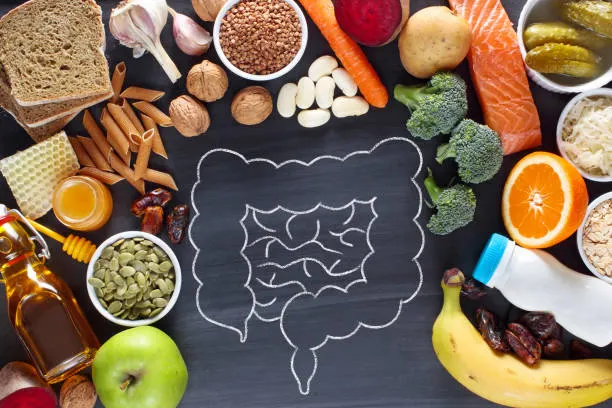
So, rather than trying to eat a single “perfect” food, it’s usually more useful to gradually increase the presence of different plant foods: fruit, vegetables, pulses, wholegrains, nuts and seeds. This type of dietary pattern provides fibre, vitamins, minerals and bioactive compounds that can contribute to a more favourable gut environment.9,10
Some simple examples might be:
Swapping refined cereals for oats, wholemeal bread or brown rice.
Adding lentils, chickpeas or beans to soups, salads or stews.
Including fruit such as apple, banana or berries, according to tolerance.
Using cooked vegetables as a regular side dish.
Incorporating nuts or seeds in small amounts.
Oats, for example, are a practical option because they provide fibre and can easily be included at breakfast or as a snack.3,10 Pulses are another interesting option, as they combine fibre, plant protein and fermentable carbohydrates that can serve as a substrate for the microbiota.4,10 Fruits such as apples provide pectin, a soluble fibre that can be fermented by gut bacteria.6
The key is to do it gradually. If a person goes from eating little fibre to consuming large amounts of pulses, raw vegetables, wholegrains and fermented foods within a few days, gas, bloating or discomfort are likely to appear. Whereas if fibre is increased little by little, the gut tends to adapt better.2,9
Fermented foods: interesting, but not essential foreveryone
Fermented foods can also be part of a diet geared towards gut health. This group includes yoghurt, kefir, sauerkraut, kimchi, kombucha, miso and some traditionally fermented vegetables.11,12
Fermentation is a process in which microorganisms transform food. Some fermented foods can contain live cultures with a potential probiotic effect, provided they have not been pasteurised or subjected to processes that eliminate these microorganisms.11,12 For example, some yoghurts, kefir, kimchi or refrigerated sauerkraut may contain live cultures, whereas other pickled products made only with vinegar may not provide live microorganisms to the same extent.12
The scientific evidence on fermented foods is particularly interesting. A clinical study published in Cell assessed the effect of a diet rich in fermented foods compared with a high-fibre diet in healthy adults. In this study, the diet rich in fermented foods was associated with increased microbial diversity and changes in immune and inflammatory markers.13,14Stanford Medicine‘s coverage of this work highlighted that a diet rich in fermented foods increased gut microbial diversity and reduced molecular signs of inflammation in the group studied.13
This doesn’t mean that everyone needs to have kombucha, kimchi or kefir every day. It means that fermented foods can be a useful tool within a varied diet, especially when introduced gradually and quality products are chosen.12,14
A simple way to start can be adding a small amount of natural yoghurt or kefir, a spoonful of unpasteurised sauerkraut, a little miso stirred into a soup at the end, or a small portion of fermented vegetables. As with fibre, quantity matters, but more isn’t always better.
How to put it into practice without overcomplicating things
Looking after the microbiota shouldn’t turn into a diet that’s hard to follow. A good strategy is to think of each meal as an opportunity to add something that feeds or supports the gut ecosystem.
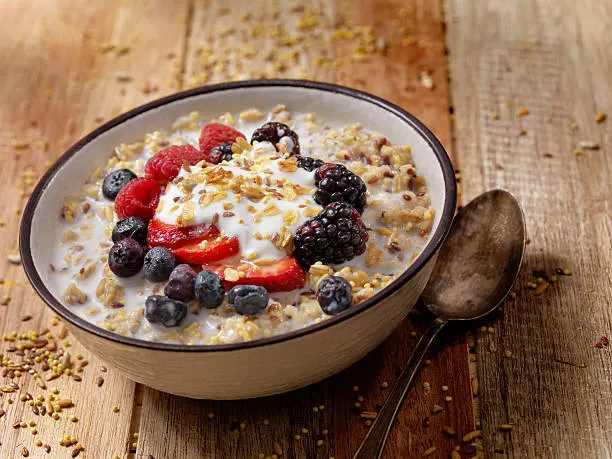
At breakfast, a simple option can be oats with fruit and natural yoghurt or kefir, if well tolerated. Oats provide fibre, fruit adds pectin or other plant compounds, and yoghurt or kefir can provide live cultures depending on the product.9,11
At lunch, a base of cooked vegetables, wholegrains and pulses can be a practical way to increase fibre variety. For example, a dish with brown rice, lentils, sautéed vegetables and olive oil can provide different types of fibre and plant-based nutrients.9,10
At dinner, gentle preparations tend to be a good option for people with more sensitive digestion. Vegetable cream soups, broths, fish or plant protein with cooked vegetables, potato or rice can be easier-to-tolerate alternatives than large amounts of raw vegetables or undercooked pulses.2,9
Fermented foods can be added as a complement, not as a compulsory main feature. A little yoghurt, kefir, miso, sauerkraut or kimchi can be enough to start with.11,12 What matters is observing tolerance and not forcing foods that trigger symptoms.
If you have sensitive digestion, preparation method matters
A food can be nutritionally interesting and still not agree with everyone. This is especially important for people with sensitive digestion, irritable bowel syndrome, inflammatory bowel disease or other gastrointestinal conditions.9,12
Many foods rich in prebiotics are also fermentable. This fermentation can be beneficial for the microbiota, but in some people it can cause gas, bloating, abdominal pain or changes in bowel habits.4 Garlic, onion, leek, pulses or some fermented foods can be problematic for people with FODMAP sensitivity or active digestive symptoms.9
Preparation can make a big difference. Cooked vegetables tend to be better tolerated than raw ones. Pulses may agree better if soaked for several hours, rinsed well and cooked thoroughly. Fruit may be better tolerated cooked, stewed or in small portions. Wholegrains can be introduced gradually, rather than changing the whole diet all at once.9,12
It’s also advisable to introduce one new food at a time. If a person adds kefir, pulses, onion, oats and kombucha all at once, it will be hard to know which food agreed or disagreed with them. Whereas if they introduce one change every few days, they’ll be better able to assess their individual tolerance.
When is it worth seeking professional help?
Although diet can support digestive health, it should not replace medical advice. If a person has persistent symptoms, severe diarrhoea, recurrent abdominal pain, blood in stools, unexplained weight loss, inflammatory bowel disease, significant irritable bowel syndrome or severe dietary restrictions, they should consult a healthcare professional or a registered dietitian.9,12
Gut health isn’t measured simply by eating more fibre or more probiotics. Recent consensus on gut health highlights that it is a broad concept, encompassing symptoms, digestive function, microbiota, gut barrier, immune system and overall wellbeing.1 This is why, in people with digestive conditions, the approach needs to be more personalised.
In some cases, a diet rich in fibre and fermented foods may be appropriate. In others, it may be necessary to temporarily adjust fibre intake, modify food texture, manage FODMAPs or prioritise gentler preparations. The key isn’t to follow a rigid list, but to find a strategy that is healthy and tolerable for each person.9,12
The final idea: feed, vary and adapt
Looking after the gut microbiota doesn’t require a perfect diet, but adaptation.
Prioritise plant foods rich in fibre, include fermented foods if you tolerate them, and adjust your diet to your needs, and most importantly, do so with a varied, gradual and sustainable approach.
References
1. Marco, M. L., Cunningham, M., Bischoff, S. C., Clarke, G., Delzenne, N., Lewis, J. D., … & Quigley, E. M. (2026). The International Scientific Association for Probiotics and Prebiotics (ISAPP) consensus statement on the definition and scope of gut health. Nature Reviews Gastroenterology & Hepatology, 23(5), 432-448. https://doi.org/10.1038/s41575-026-01176-x
2. Johns Hopkins Medicine. (s. f.). Gut health: Understanding it and treating digestive disorders. Johns Hopkins Medicine. gut-health.ashx
3. Solan, M. (2025, 24 de noviembre). How to feed your gut. Harvard Health Publishing. How to feed your gut – Harvard Health
4. Davani-Davari, D., Negahdaripour, M., Karimzadeh, I., Seifan, M., Mohkam, M., Masoumi, S. J., … & Ghasemi, Y. (2019). Prebiotics: definition, types, sources, mechanisms, and clinical applications. Foods, 8(3), 92. https://doi.org/10.3390/foods8030092
5. Cleveland Clinic. (2025, 21 de marzo). Prebiotics vs. probiotics: What’s the difference?Cleveland Clinic. Difference Between Prebiotics and Probiotics
6. Slavin, J. (2013). Fiber and prebiotics: mechanisms and health benefits. Nutrients, 5(4), 1417-1435. https://doi.org/10.3390/nu5041417
7. Tawfick, M. M., Xie, H., Zhao, C., Shao, P., & Farag, M. A. (2022). Inulin fructans in diet: Role in gut homeostasis, immunity, health outcomes and potential therapeutics. International Journal of Biological Macromolecules, 208, 948-961. https://doi.org/10.1016/j.ijbiomac.2022.03.218
8. Sanlier, N., Keskin, M. G., & Oz, F. (2026). Inulin as a multifunctional prebiotic: from gut modulation to systemic health benefits. Food Quality and Safety, 10, fyag006. https://doi.org/10.1093/fqsafe/fyag006
9. Johns Hopkins Medicine. (s. f.). 5 foods to improve your digestion. Johns Hopkins Medicine. 5 Foods to Improve Your Digestion | Johns Hopkins Medicine
10. Huddy, J. (2024, 8 de agosto). The best gut healing foods for improved digestion, according to an RD. Nourish. The Best Gut Healing Foods For Improved Digestion, According To An RD | Nourish
11. Cleveland Clinic. (2025, May 5). Try these foods high in probiotics. Health Essentials. 19 Foods High in Probiotics
12. Bilodeau, K. (2023, September 12). Fermented foods for better gut health. Harvard Health Publishing. Fermented foods for better gut health – Harvard Health
13. Weaver, J. (2021, July 12). Fermented-food diet increases microbiome diversity, decreases inflammatory proteins, study finds. Stanford Medicine News Center. Fermented-food diet increases microbiome diversity, decreases inflammatory proteins, study finds
14. Wastyk, H. C., Fragiadakis, G. K., Perelman, D., Dahan, D., Merrill, B. D., Yu, F. B., … & Sonnenburg, J. L. (2021). Gut-microbiota-targeted diets modulate human immune status. Cell, 184(16), 4137-4153. https://doi.org/10.1016/j.cell.2021.06.019
We have updated the CurQD® portfolio to offer a more flexible and personalised use, adapted to each patient’s real needs.
CurQD®-1:is no longer available. Instead, you should purchase CurQD®-3
CurQD®-3: induction in moderate-to-severe intestinal dysfunction
CurQD®-5: induction in mild intestinal dysfunction, step-down after CurQD®-3 and maintenance in patients with an insufficient response to Qura or early relapse NEW!!!
Dispones de 14 días naturales desde la recepción del producto/s para desistir o devolver el mismo.
No se admite la devolución ni el desistimiento, por razones de protección de la salud e higiene, cuando el envoltorio, embalaje o precinto que protege el producto, haya sido abierto. El producto deberá estar envuelto adecuadamente, con la etiqueta original, no manipulado y con todos sus componentes originales.
Puedes iniciar la devolución del producto contactándonos:
Enviaremos un mensajero a recoger el producto en la dirección que nos facilites. Entrega el producto al transportista.
El reembolso se realizará por el mismo medio de pago con el que se abonó el producto y por el importe correspondiente. Se realizará antes de que hayan transcurrido 14 días desde la fecha de recepción de la devolución en las oficinas de Adacyte.
Los gastos derivados de la recogida del producto correrán a cargo de Adacyte.
Para cualquier duda, sugerencia, consulta o reclamación sobre la tienda online, puedes dirigirte al Servicio de atención al cliente.
Atención al cliente:
Teléfono 93 400 67 01 (en horario de lunes a jueves de 09:00h a 18:00h y viernes de 09:00h a 15:00h)
Disponemos de hojas de reclamaciones oficiales a disposición de los consumidores y usuarios, que podrán ser presentadas en la dirección postal y correo electrónico arriba indicados.
Puedes solicitar la hoja de reclamaciones llamando al teléfono de atención al cliente o descargarla directamente aquí: Descargar hojas oficiales.
El Servicio de atención al cliente de Adacyte atenderá y dará respuesta a tu reclamación a la mayor brevedad posible, y siempre en el plazo máximo de un mes.
Las cookies son importantes para ti, influyen en tu experiencia de navegación, nos ayudan a proteger tu privacidad y permiten realizar las peticiones que nos solicites a través de la web. Utilizamos cookies propias y de terceros para analizar nuestros servicios y mostrarte publicidad relacionada con tus preferencias en base a un perfil elaborado con tus hábitos de navegación.
Puedes Aceptar o Rechazar aquellas cookies que no sean técnicas, así o también configurar tus preferencias pulsando Configurar Cookies.
Más información, consulta nuestra Política de Cookies
Configurar